Media Contact:
Joe Hui
Director of Communications
jhui@aplahealth.org
213.201.1342
8.11.2026
How our dental program became a lifeline — and why it faces its next great test
In the spring of 1984, two dentists sat in a kitchen in Glendale and asked each other a simple question: who was going to take care of the patients no one else would see?
Dr. Jon Bauer and Dr. Ronald LeBaron watched as the AIDS crisis devastated their community. People with HIV were losing their jobs, their insurance, and in many cases their dentists. Practitioners across Los Angeles were turning patients away out of fear or stigma, discarding instruments after treating anyone they suspected might be gay, or segregating patients from others in the waiting room. Those fortunate enough to find care often faced a gauntlet of humiliation to get it. There was no system. There was no safety net. There was, as yet, no clinic.
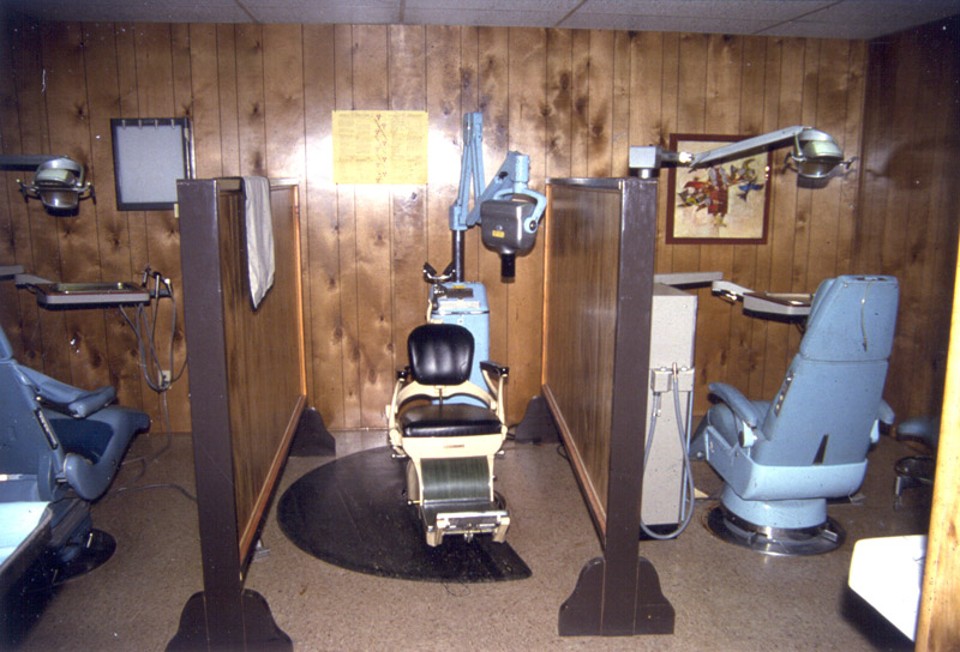
After a year of planning, institutional rejections, and persistent advocacy, that changed. On March 5, 1985, the Greene Dental Clinic opened its doors in a county-supplied trailer at West Hollywood Park — the first nonprofit dental clinic in the country dedicated exclusively to treating people living with HIV/AIDS. It was named in honor of Dr. Raymond Greene, a founding member of the Dental Society for Human Rights and the first among them to die from AIDS.
The clinic’s founding coincided with a broader reckoning in dental medicine. Before the AIDS crisis forced the profession to confront the reality of bloodborne disease transmission, gloves were not standard practice in most dental offices. The epidemic changed that. Bauer himself participated in Los Angeles County Health Department policy discussions about mandatory glove use — a standard that, once adopted, transformed infection control protocols across the entire profession and made dental care safer for every patient and provider, not just those living with HIV. The Greene Dental Clinic was not only a place of care; it was a laboratory for clinical practices that would define modern dentistry.
That original location would later become the site of the West Hollywood AIDS Memorial — a convergence that is both coincidental and profound. The park where dentists once treated patients abandoned by medicine became a place of remembrance for all those that the epidemic took. The clinic and the memorial form a continuous story: of care, of resistance, and of a community that refused to let its own go unserved.
In 2025, APLA Health’s dental program celebrated its 40th anniversary. What began as a volunteer operation staffed by members of the Dental Society for Human Rights — including Drs. Randy Harrison, Bryan Saiki, and Marvin Meisler, alongside AIDS Project Los Angeles co-founder Nancy Cole Sawaya, who trained as a dental assistant — has grown into one of the largest community dental programs in Los Angeles County. Today, APLA Health operates 24 dental chairs across four locations: Downtown Los Angeles, the Gleicher/ Chen Health Center in Baldwin Hills, the CDU/ MLK Medical Campus in South Los Angeles, and the Long Beach Health Center. This year, the dental program served 2,843 patients, including many who are on Medi-Cal, are uninsured or underinsured, living with HIV, or simply unable to access care anywhere else.
The program welcomes Medi-Cal and offers sliding-scale fees for those without coverage. Services span the full range of general and specialty dentistry — exams, cleanings, fillings, extractions, oral surgery, and dentures, among others. The mission remains what it was when Bauer and LeBaron conceived it in that Glendale kitchen: no one turned away. But that mission is now under threat.
HR1, the so-called “One Big Beautiful Bill Act,” slashed over $1 trillion in federal Medicaid funding nationwide when it was signed into law in July 2025. Facing a deficit that the state attributed directly to those federal cuts, California’s 2025–26 budget included a significant rollback of dental benefits for undocumented Californians enrolled in Medi-Cal, with full-scope coverage ending July 1, 2026. That deadline has now moved — but it has not disappeared. In the 2026–27 state budget signed in late June, California agreed to pick up the tab for one more year, postponing the elimination of full dental benefits for undocumented adults and others without satisfactory immigration status until July 1, 2027. Meanwhile, an enrollment freeze for new undocumented adult applicants to full-scope Medi-Cal took effect January 1, 2026, and remains in place.
For APLA Health’s dental program, the reprieve is welcome — and fragile. Many of the clinic’s 2,843 annual patients are undocumented immigrants who rely on Medi-Cal to cover the cost of their care. If coverage lapses as now scheduled in 2027, the program faces an estimated $1 million in lost reimbursements — and patients face a stark choice: forgo care entirely or arrive in crisis. With federal Medicaid cuts continuing to strain state finances, there is no guarantee next year’s budget will offer the same protection. The threat has been postponed, not resolved, and it still looms over a clinic whose founders knew this dynamic intimately: patients in need, and a system unwilling to help them.
The parallels to 1985 are not lost on those who know this history. Then, it was fear and stigma that closed dental offices to people with HIV. Now, it is policy and budget politics. The face of exclusion has changed; the experience of patients left behind has not.
The one-year extension is proof that advocacy works. APLA Health joined a coalition of health centers, dental providers, and advocacy organizations calling on state leaders to reverse course, and the 2026–27 budget answered, preserving both dental benefits and Medi-Cal dental reimbursement rates for another year. But with the cuts merely delayed and the federal funding picture still deeply uncertain, the fight is far from over. APLA Health will continue pressing for the permanent restoration of full dental benefits for all Medi-Cal enrollees, regardless of immigration status.
What is certain is the legacy this program carries into its fifth decade. When Bauer and LeBaron received APLA’s “Heart of APLA” award at a 1987 fundraiser hosted by Elizabeth Taylor, LeBaron said something that has endured as the clinic’s quiet motto: We will be judged by how we respond to an issue.
Thank you to Jon Bauer, DDS for his generous contributions to this article.
###
About APLA Health
APLA Health (formerly AIDS Project Los Angeles) provides comprehensive healthcare and vital support services to more than 23,000 people each year. Since 1983, we have remained committed to ending the HIV epidemic in our lifetime. Through eight Federally Qualified Health Centers across Los Angeles County, we deliver primary care, dental, mental health, and sexual health services, along with food and housing support for people with HIV. Our Vance North Necessities of Life Program provides groceries equalling more than one million meals annually, making it the nation's largest food pantry for people with HIV. APLA Health also advances sound health policy and raises critical support through AIDS Walk Los Angeles and the Best in Drag Show. Learn more at aplahealth.org.